
Bridging the Gap Between What the Industry Is Saying and What the Public Needs to Hear
The policy landscape for California's life sciences and healthcare sectors is shifting at a rapid pace. But as leaders, if we only focus on the mechanics of legislation, we are missing the forest for the trees.
At the recent California Leadership Forum, two expert panels focused on voter and policy perspectives. In the 2026 Elections Outlook panel, featuring Sam Chung (SVP, Government Relations & External Affairs) California Life Sciences (CLS), John Nienstedt (President, Competitive Edge Research & Communication), and Adam Rosenblatt (Partner, Bold Decision), panelists unpacked actionable trigger points on how voter sentiment directly shapes the legislative agenda.
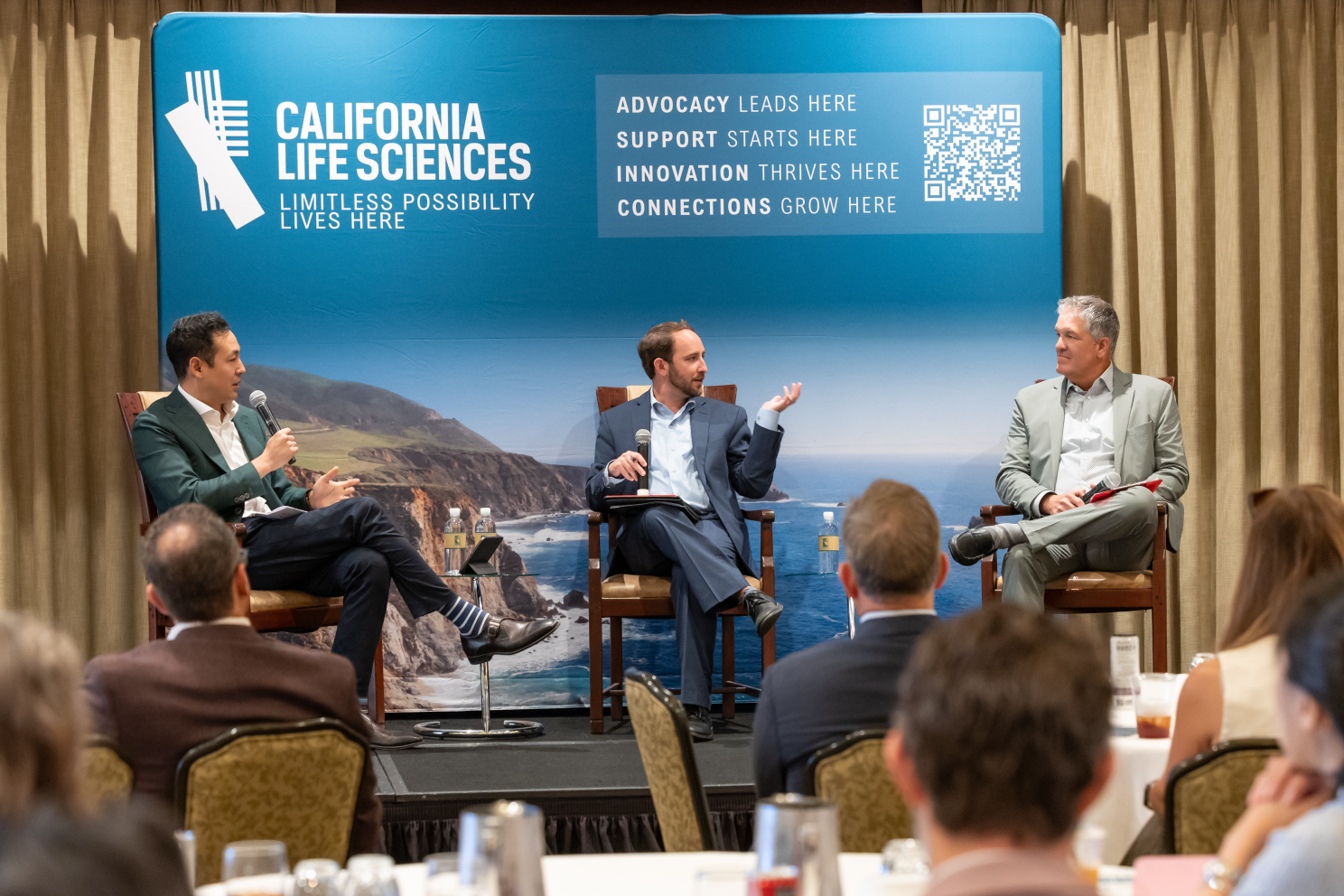
Left to right: Sam Chung, SVP, Government Relations & External Affairs, California Life Sciences; Adam Rosenblatt, Founding Partner, Bold Decision; and John Nienstedt, President, Competitive Edge Research
Successfully navigating the current inflection point requires a strategic recalibration. We must apply rigorous, data-driven logic to understand the political ecosystem, while injecting human-centric heart into how we address public anxiety and build trust. If this means evolving who is in the room and changing the way we tackle this messaging disconnect, then that has to be a step forward.
Here is the panel's perspective on the policy realities facing the life sciences economy and how leaders can chart a path forward.
The Real Driver of Policy: Voter Frustration & Messaging Disconnect
To understand where policy is going, you have to understand the electorate. Today's voters are experiencing deep-rooted frustration. While gas prices fluctuate, costs like housing, groceries, utilities, and insurance feel like they are never going down. This persistent economic pressure has fueled high levels of skepticism toward both government and corporate institutions.
For the biotech and pharma sector, this frustration has manifested as broad, bipartisan support for drug pricing reform. Because policymakers ultimately respond to voter sentiment, the pricing debate is not a temporary political headline - it is a durable reality that will define the regulatory environment for years to come.
The panel indicated there is a disconnect between industry metrics and kitchen-table realities. A major point of tension highlighted during the panel is the gap between industry facts and public perception.
The Industry's POV: From an analytical perspective, the industry has made strides, with average drug prices decreasing by over 3% in the past year.
The Public's POV: To a voter struggling to pay their mortgage, rent, or grocery bill, a 3% statistic is functionally inconsequential. When everyday costs are rising across the board, dry industry metrics are quickly washed out by the lived experience of inflation.
People often don't feel like our industry really understands what is most important to them or who they really are. The public is made up of patients, parents, and caregivers, and sometimes they feel as if they are being spoken to as customers or voters rather than people.
As leaders, if we rely solely on intellectual arguments about R&D costs and macro-level price drops, we risk appearing tone-deaf. Rebuilding trust requires a willingness to address affordability head-on, recognizing that public perception, not spreadsheet data, is the ultimate political reality.
Three Strategic Shifts for the Life Sciences Economy
To align our policy efforts with public sentiment, the forum's panelists suggested several critical shifts in how we communicate:
A. Retire the term "the pharmaceutical industry"
Language matters. Panelists advised retiring the term "pharmaceutical industry" because it evokes corporate sales and marketing rather than clinical breakthroughs. Instead, champion the "life sciences economy" or the "life sciences community." This shifts the narrative from transaction to economic and human contribution.
B. Make "invisible" everyday biotech contributions relatable
While the industry naturally loves to talk about curing rare diseases or high-level clinical innovations, policymakers must focus on what impacts the greatest number of people. We must show the invisible ways the life sciences economy supports the average person's health and well-being on an everyday basis. Our industry has a lot to say, but people aren't seeing it.
C. National stories need a hyper-local impact
A one-size-fits-all national narrative is no longer sufficient. To effectively engage policymakers, organizations must build a national "umbrella" narrative that can be broken down into sophisticated, hyper-localized, district-specific messaging. When policy impacts are made local and personal, they resonate far more powerfully. When we think of patient impact, especially in the rare disease space, there are a lot of throughlines to be found.

Full house at the California Leadership Forum hosted by CLS in Torrey Pines, San Diego, CA.
Leading at an Inflection Point
How do you steer a massive healthcare system, a cutting-edge biotech startup, or an academic research powerhouse when the ground is shifting beneath your feet?
This was the core question of the insight-packed Executive Roundtable, brilliantly moderated by Libby Greer of FTP (Forbes Tate Partners). The panel brought together a powerhouse of diverse perspectives: Niall Casey Casey, Co-Founder & Chief Intellectual Property Officer of Carlsmed ; Barbara Jung, MD, Associate Vice Chancellor and Dean, UC San Diego School of Medicine; Sean McCarthy, CEO & Chairman of CytomX Therapeutics; Jonathan Siegrist, EVP R&D & CTO of QuidelOrtho ; and Peter Slavin, MD, President & CEO of Cedars-Sinai.
Throughout, the theme of balancing operational pressures with human-centric care remained front and center.
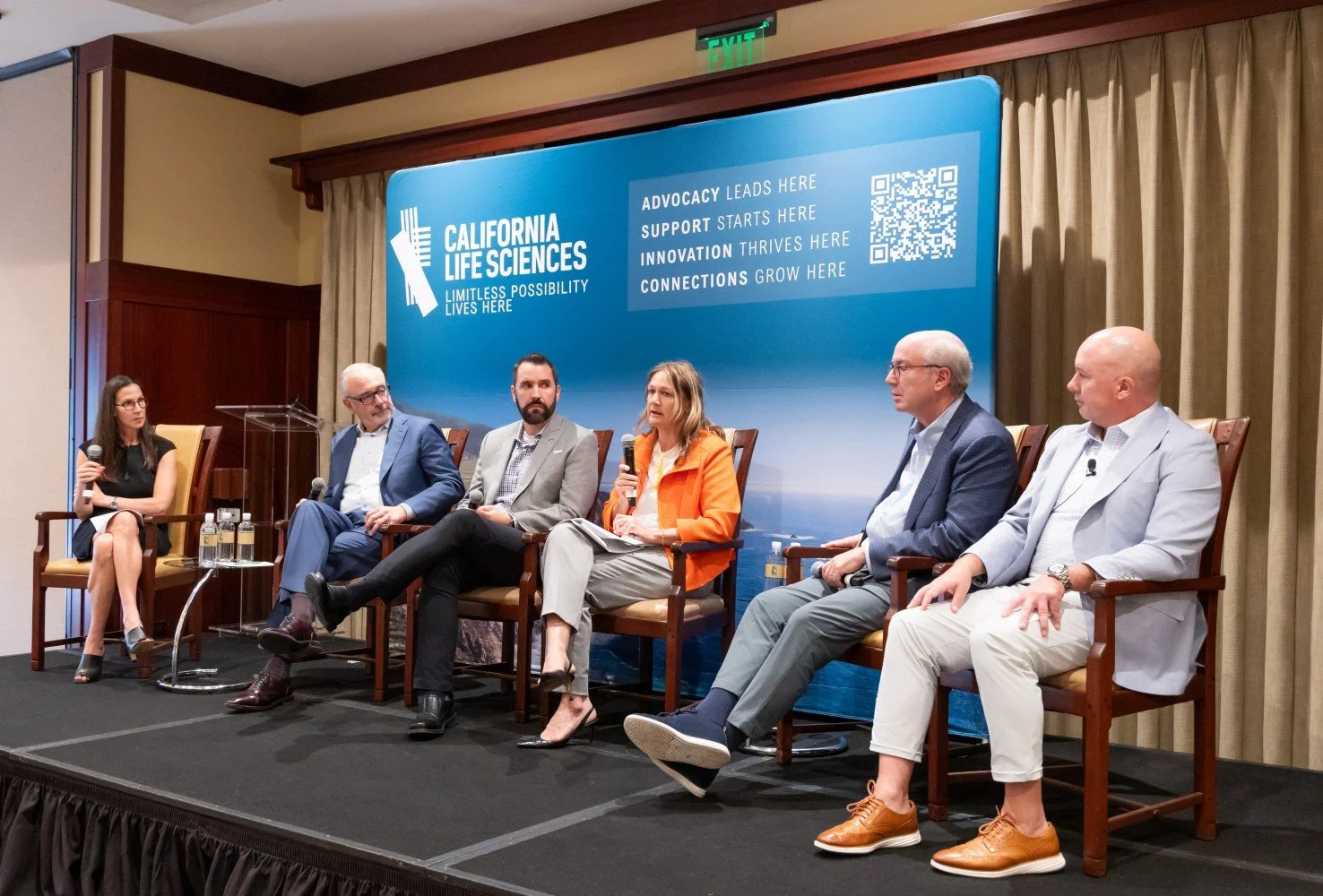
Left to right: Libby G., FTP (Moderator); Sean M., CEO, CytomX; Jonathan S., EVP & CTO, QuidelOrtho; Barbara J., Associate Vice Chancellor, UCSD School of Medicine; Peter Slavin, MD, President & CEO, Cedars-Sinai; Niall C., CTO, Carlsmed.
The panelists moved beyond broad leadership concepts to outline five concrete operational priorities required at today’s inflection point:
A. Decisive Capital & Footprint Discipline
When macroeconomic conditions tighten, survival requires making hard, proactive structural adjustments rather than waiting for red ink to accumulate:
Rigorous Pipeline Pruning: CytomX Therapeutics CEO Sean McCarthy highlighted the necessity of downsizing to extend runway for late-stage clinical trials, emphasizing that high-performing innovation teams must establish strict go/no-go criteria and actively celebrate stopping non-viable projects to redeploy capital where it matters most.
Footprint Rationalization: QuidelOrtho 's EVP of R&D and CTO, Jonathan Siegrist , detailed the difficult post-COVID market normalization that forced razor-sharp footprint consolidation across manufacturing and R&D sites to drive cost efficiencies.
Academic & Capacity Adjustments: UC San Diego School of Medicine's Barbara Jung shared the painful reality of cutting graduate program intakes in half following sudden NIH indirect cost recovery uncertainties, demonstrating how research institutions must adapt when funding visibility vanishes.
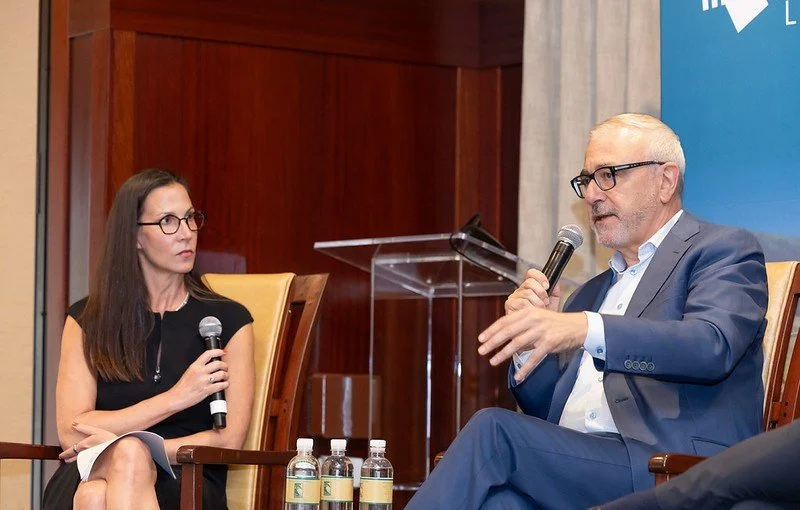
B. Proactive Preparation for Policy Storm Clouds
Healthcare delivery systems face impending federal policy shifts that threaten financial stability. Cedars-Sinai's President & CEO, Peter Slavin, MD, warned of multi-vector headwinds, including Medicaid enrollment reductions under major federal legislation, proposed adjustments to the 340B drug pricing program, and site-of-service reimbursement cuts. Rather than taking reactive, emergency cuts that compromise patient care, Cedars-Sinai initiated proactive expense and revenue management over a year in advance to safeguard its long-standing mission of broad access and fighting healthcare disparities.
C. Generating Indisputable Clinical & Economic Evidence
In a capital-constrained market, getting new technologies adopted by health systems and covered by CMS requires proving tangible, quantifiable value:
Registry-Backed Impact: Carlsmed Co-Founder & Chief Intellectual Property Officer, Niall Casey explained how establishing a two-year clinical implant registry yielded data showing a 74% reduction in spine re-operation rates, giving CMS and surgeons the clinical and economic justification required for new DRG coding and rapid technology adoption.
Strategic Diagnostic Alignment: Diagnostic developers must recognize that therapy providers often view companion diagnostics as hurdles unless they are seamlessly integrated into early clinical trials and aligned with the partner's core strategy.
D. Deploying AI with a "Human in the Loop"
While artificial intelligence offers vast potential, leaders urged a pragmatic, human-centered approach:
Administrative Burden Reduction: Cedars-Sinai has deployed ambient AI documentation across more than 150 clinical use cases, reducing physician documentation time by 75% and allowing clinicians to look at patients rather than computer screens.
Ruthlessly Preserving Human Connection: Both Barbara Jung and Niall Casey cautioned against cognitive overload and over-reliance on automated tools, stressing that AI must maintain a "clinician in the loop" to preserve empathy, patient safety, and true human connection.
E. Maintaining American Leadership in Global Innovation
Addressing the macro environment, panelists noted that the ultimate competitive threat isn't neighboring domestic biotech hubs, but the rapid scaling of state-backed R&D and manufacturing in China. To keep California and the United States at the forefront of the life sciences economy, leaders must streamline overly burdensome regulatory hurdles, accelerate clinical trial timelines, and maintain a culture that supports high-risk, groundbreaking science.
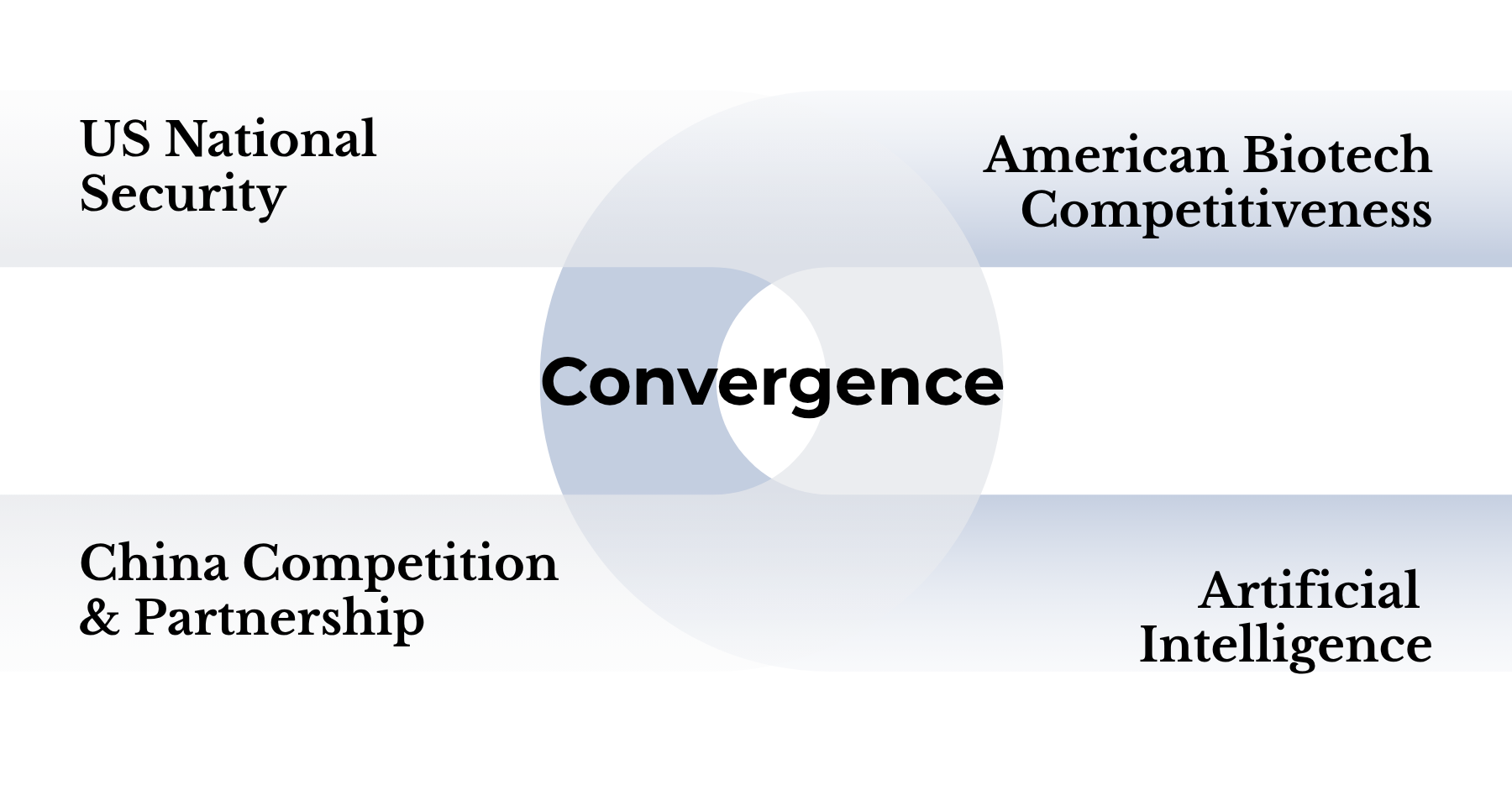
Top lens to consider when we examine the convergence of trends executives are tackling in the current state of U.S. life science and pharma economy
The forum, capped off by closing remarks from California Life Sciences (CLS) President & CEO Mike Guerra, made one thing clear: the future of policy advocacy is increasingly local, personal, and grounded in trust.
This forum gave executive leaders in the room a lot to think about as they juggle competing priorities and sustainably build a runway for their organizations.
I believe the path forward isn't about choosing between pricing power and reputation. It's about biotech leaders getting aligned to build a localized, sophisticated communication infrastructure, and ensuring our work directly serves, and is understood by, the average citizen. Only then can we build policy relationships that stand the test of time.
